
People are fundamentally misunderstanding what’s happening with AI and the job market. The conversation is stuck on ‘AI will help you write code faster,’ but that’s missing the cliff we’re standing on. It’s not just the grunt work that’s disappearing, it’s the higher-level functions we thought were safe
Take Business Analysts. I’ve had to fill in for them before, elaborating features into story cards. I hated doing it, I’m a dev, I’d rather just be in the code. But now? I can do it with AI in minutes, and the output is better than most handcrafted cards I’ve been handed. It catches edge cases I didn’t think to add, uses standard templates, maps out the logic before I’ve even opened my IDE.
I’m not a BA. I don’t want to be a BA. But I don’t need one anymore.
Move beyond BAs and the pattern repeats. Breaking a project into features? That’s a Product Owner. Analysing logs to prioritise work? That’s a Data Analyst. Digging through emails to find the next product move? That’s a Product Manager. All of it is being automated.

Right now, AI is best at software engineering work mostly because that’s where the training data is richest and the early adopters live. But look at what’s happening in mathematics, law, radiography. The general application is already taking hold.
This goes way beyond ‘autocomplete.’ There was a recent case where someone left an AI agent running for a few weeks with a simple brief: build a web browser from scratch. It did. Three million lines of Rust code, planned and executed autonomously.
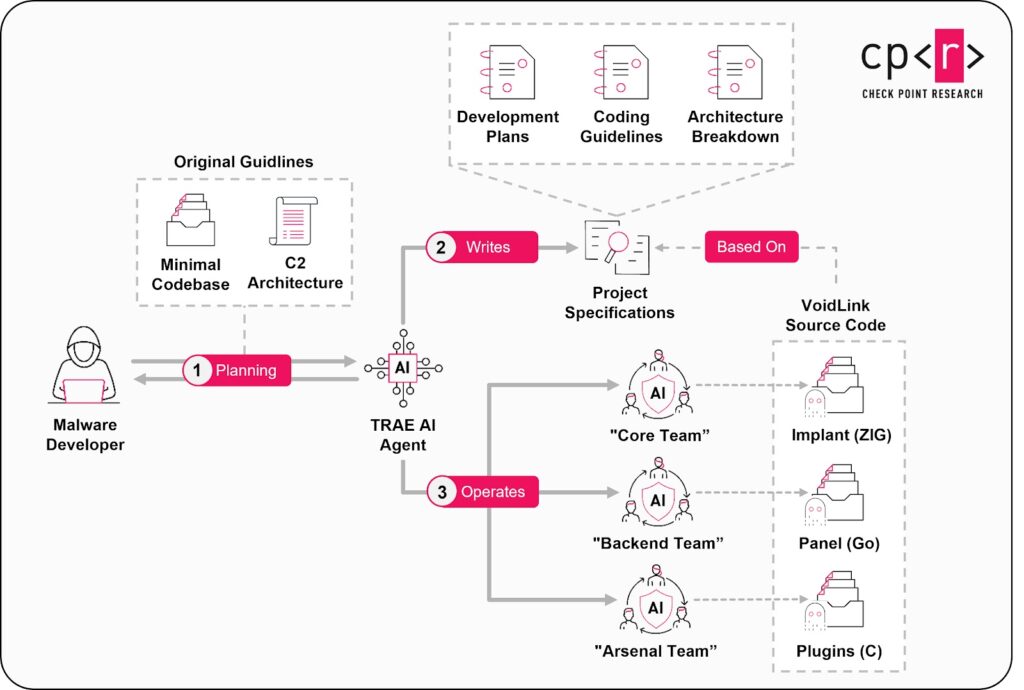
Or take VoidLink malware. One developer used AI to simulate three separate development teams, each implementing different parts of a project spec, a spec that was also written by AI. The developer coordinated it all, but the actual work? That was the machine.
This isn’t a normal tech shift. Docker, the Cloud, third-generation programming languages, CI/CD. Those were tools that changed how we work. They made us faster, let us work at a different level of abstraction. This is different. This is the automation of white-collar work itself.
And before someone says ‘it could plateau tomorrow’, sure, it’s possible. But there’s zero evidence of that happening. Every benchmark shows acceleration, not slowdown. We’re now at the point where AI is helping to improve AI itself, along with the tooling around it. That’s not linear growth. That’s exponential.
In the short term, I actually think demand for senior developers with automation skills is going to spike. Companies are in a mad dash to roll out AI for HR, accounting, marketing and they need us to build those systems. If you can wrangle LLMs, architect agentic workflows, and integrate AI into existing infrastructure, you’re valuable right now.
But that’s temporary. Once those tools are built, once they’re simple enough that non-technical people can use them, once they can deploy and maintain themselves—what then?
And here’s the other shift: roles will collapse. You won’t need a Business Analyst, a Product Owner, and two developers. You’ll have one developer with expanded responsibilities and a suite of AI tools. The team of five becomes a team of one.
This is what actually terrifies me. In a different society, this would be an incredible advancement. We’d be eliminating bullshit jobs and freeing up huge portions of the population to actually live, all while productivity stays the same or improves.
But capitalism requires the working class to sell their labour just to survive. If that labour is no longer needed, if a machine is smarter, cheaper, works 24/7, and never complains. What happens to the people?
Some will argue that businesses will enter a feature arms race, competing so hard they’ll need more developers using AI to keep up. But corporations don’t operate like that. They act as cartels. If they can cut costs while providing the same service, they will. They’re not going into a cold war with each other, they’re going to pocket the savings.
And the idea that scrappy startups will disrupt the giants? Laughable. The giants buy them. And in sectors like telcos, airlines, banks, insurance there are so many layers of regulatory red tape that new competition can’t even enter the market
I don’t think most people are willing to look at that reality yet. It’s easier to believe you’re special, that your particular skill set is immune, that your experience counts for something the machine can’t replicate.
But if it’s close enough to us in intelligence but costs a fraction of the price, the market is going to choose the machine every single time. And when that happens, ‘close enough’ becomes ‘good enough,’ and ‘good enough’ becomes ‘preferred.’
I’m putting these thoughts down now because I want a record of when we could still see this coming. When we still had time to ask: what kind of society do we want on the other side of this?
Because the automation is happening either way. The only question is whether we’re going to let the market decide what happens to the people it doesn’t need anymore.